
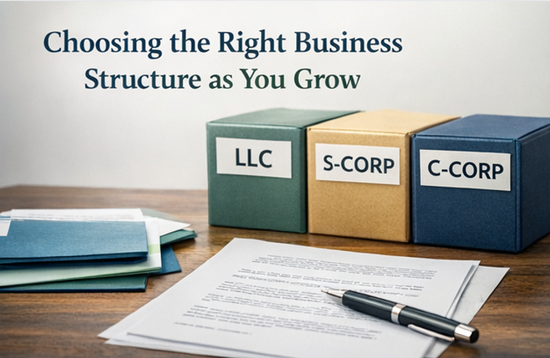
When a business is initially formed, the choice of entity is often guided by simplicity and efficiency. As operations expand and financial results become more consistent, that decision begins to carry broader implications.
Your business structure influences how income is taxed, how compensation is handled, and how future planning decisions are approached. As profitability increases, these factors can have a more meaningful impact on overall outcomes.
Reevaluating your structure does not necessarily mean that a change is required. In many cases, the existing entity continues to be appropriate. However, there are situations where adjustments can improve tax efficiency or better align the business with its current objectives.
Changes in ownership, growth plans, or long-term strategy can all influence whether a different structure should be considered. Addressing these factors proactively allows for more effective planning and reduces the likelihood of complications later.
Timing is also important. Structural changes are most effective when implemented with a clear understanding of both the benefits and the administrative requirements involved. Waiting too long or acting without proper planning can introduce unnecessary complexity.
Ultimately, the goal is to ensure that your business structure supports both current operations and future growth. Periodic review provides the clarity needed to make informed decisions as your business continues to evolve.